What is cold email? A cold email is an unsolicited, targeted email sent to a prospect with whom you have no prior relationship, with the goal of starting a relevant business conversation.
That one sentence is the definition. But cold email in 2026 is both simpler and harder than most people think. Simpler because the mechanics haven’t changed. Harder because inboxes are noisier, spam filters are smarter and recipients have less patience than ever.
I’ve run cold email campaigns for B2B clients across SaaS, agencies and professional services. What I’ve seen consistently is that cold email still works. But only when it’s done with real targeting, genuine personalization and proper infrastructure. Done carelessly, it’s just digital junk mail.
In this guide, you’ll learn:
- Exactly what is cold email and how it differs from spam and email marketing
- How cold email works from start to finish
- Whether cold email actually delivers results (with current benchmarks)
- Who uses cold email and for what purpose
- What the law says about sending cold emails
- What separates a great cold email from a forgettable one
What Is Cold Email?
Cold email is an unsolicited email sent to a recipient who has no prior relationship with the sender. The sender doesn’t know the recipient personally, hasn’t done business with them before and the recipient hasn’t opted into any mailing list.
The key word is targeted. A cold email is written for a specific person or a specific type of person. It’s not a mass blast to thousands of random addresses. That distinction is what separates cold email from spam.
The cold email definition in plain English
When you send a cold email, you’re saying: “I found you, I think what I’m offering is relevant to your situation and I’d like to start a conversation.” The recipient didn’t ask to hear from you, but your message is specific enough to be worth their attention.
Three attributes define a true cold email:
- No prior relationship — you and the recipient have never communicated before
- Intentional targeting — you chose this person for a specific reason, not at random
- Business intent — the goal is to open a conversation, book a meeting or create an opportunity
Cold email vs. spam: what’s the difference?
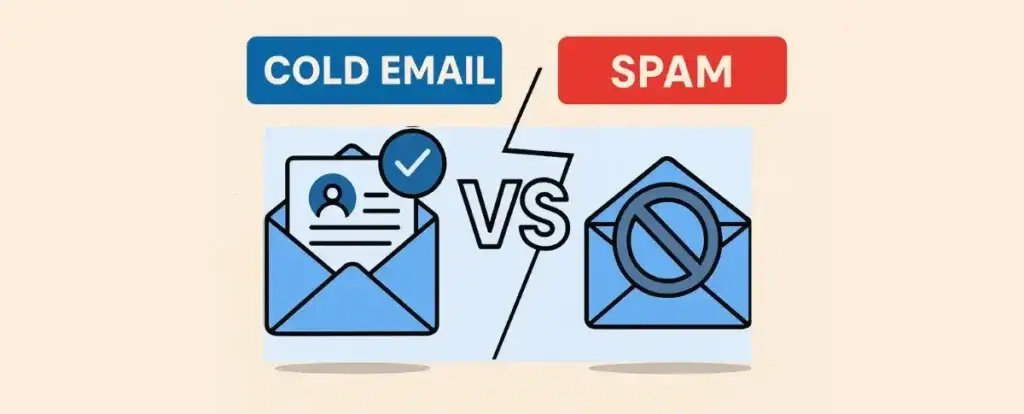
This is the most common question people ask when they first encounter cold email. The honest answer: cold email and spam share the fact that neither is opt-in. Everything else is different.
| About | Cold Email | Spam |
|---|---|---|
| Targeting | Specific, researched recipient | Bulk, random addresses |
| Personalization | Tailored to the individual | Generic, template blast |
| Intent | Start a relevant conversation | Trick or deceive for quick gain |
| Legality | Legal when compliant (CAN-SPAM, GDPR, CASL) | Illegal in most jurisdictions |
| Opt-out | Unsubscribe option included | Typically no opt-out |
A well-executed cold email respects the recipient’s time. Spam doesn’t. That’s the real dividing line.
What is cold email? What does it mean in practice?
In practice, cold emailing looks like this: a sales rep at a SaaS company notices that a particular marketing director at a mid-sized e-commerce brand matches their ideal customer profile. They write a short, personalized email referencing something specific about that company (a recent product launch, a challenge common to their industry) and propose a 20-minute call.
That’s what is cold email. It happens millions of times every day across sales teams, agencies, recruiters, founders and job seekers. When it’s done well, it creates business opportunities that wouldn’t exist otherwise.
How Does Cold Email Work? The Basic Mechanics
Cold email follows a clear process from first idea to booked meeting. Here’s how it works, step by step.
Step 1: Define your ideal target
Before writing a single word, you need to know exactly who you’re emailing. This means defining your Ideal Customer Profile (ICP): the type of company and the type of person within that company most likely to benefit from what you’re offering.
Good targeting is the single biggest driver of cold email success. A well-written email sent to the wrong person fails. A mediocre email sent to exactly the right person at exactly the right moment can still book a meeting.
Tools commonly used for this: LinkedIn Sales Navigator, Apollo.io, Clay and ZoomInfo.
Step 2: Build a targeted prospect list
Once you know your ICP, you build a list of specific people who match it. Each entry should include their name, company, role, email address and a note about why they’re a good fit. That information becomes the raw material for personalization.
The quality of your list directly determines the quality of your results. A smaller, more relevant list almost always outperforms a larger, generic one.
Step 3: Write a short, personalized email
The email itself has four components:
- Subject line — short, specific, non-clickbait
- Opening line — something specific to this person, not a template opener
- Value proposition — one sentence on why this is relevant to them
- Call to action — one clear, low-friction ask (usually a question or a short meeting request)
The best cold emails are under 100 words. Brevity signals respect for the reader’s time.
Step 4: Send from a properly warmed-up inbox
Technical setup matters more than most beginners realize. Sending cold email from your primary business domain risks damaging its reputation if things go wrong. Most practitioners use secondary domains (e.g. riadhasan-outreach.com alongside riadhasan.com) with properly configured SPF, DKIM and DMARC records.
A new inbox must also be “warmed up”, meaning you gradually increase send volume over 2 to 4 weeks before launching a campaign at full scale. This builds sender reputation with email providers like Google and Microsoft.
Step 5: Follow up consistently
Most replies don’t come from the first email. The data consistently shows that 50–70% of positive responses come from follow-up emails. A typical cold email sequence runs 3–5 emails sent over 2–3 weeks, each adding a different angle or piece of value rather than just asking again.
Knowing when to stop is equally important. Three to five touches is generally the limit before it becomes unwelcome.
Related reading
Cold Email Follow-Up: The Right Timing, Sequence & Templates — a full guide to structuring your follow-up sequence, what to say in each touch and when to call it.
Does Cold Emailing Work? What the Data Says
Yes, cold email works when it’s executed correctly. The evidence is in the numbers.
Here are the current benchmarks for cold email performance in 2026:
| Metric | Industry Average (2026) |
|---|---|
| Open rate | 80–90% (well-deliverable campaigns) |
| Reply rate | 2–5% (targeted, personalized outreach) |
| Positive reply rate | 1–3% (interested, not just ‘remove me’) |
| Meeting booked rate | 1–2% of emails sent |
These numbers vary significantly by industry, targeting quality and how personalized the emails are. The upper end of these ranges is achievable. The lower end is what happens with generic, poorly targeted campaigns.
I’ve seen campaigns in the agency space consistently hit 2–2% reply rates with tight ICP targeting and genuine first-line personalization. I’ve also seen ‘spray and pray’ campaigns barely break 1%. The difference isn’t luck. It’s preparation.
When cold email works and when it doesn’t?
| It works when… | It struggles when… |
|---|---|
| Your ICP is well-defined and your list reflects it | You’re emailing anyone who might theoretically buy |
| Emails feel written for that specific person | Every email is the same with the name swapped |
| Your offer is relevant to a real problem they have | You lead with features instead of their pain |
| You follow up with value, not just ‘checking in’ | You send one email and give up, or follow up too aggressively |
| Your technical setup is solid (SPF, DKIM, warmed inbox) | You’re sending from a cold inbox on your main domain |
Related reading
Average Cold Email Response Rate: Benchmarks & How to Beat Them — industry-specific data and five concrete changes that move your reply rate.
Who Uses Cold Email and for What?
Cold email is used across industries and roles whenever someone needs to initiate a professional conversation with a stranger. Here are the most common use cases.
B2B sales outreach
The most widespread use case. Sales reps and founders use cold email to book discovery calls and product demos with potential customers. Tools like Instantly, Smartlead and Apollo are purpose-built for this workflow, enabling personalized outreach at scale.
Lead generation for agencies and consultants
Cold email is the primary client acquisition channel for many agencies and freelance consultants, including the campaigns I run for my own clients at riadhasan.com. The proposition is simple: identify businesses that match your service offering, reach out with a relevant angle and convert conversations into contracts.
Recruiting and talent sourcing
Headhunters and in-house talent teams cold email passive candidates: people who aren’t actively job-hunting but might be open to the right opportunity. LinkedIn InMail is the more common channel for this, but email often gets higher response rates when done well.
Partnership and collaboration outreach
Founders, content marketers and PR professionals use cold email to propose partnerships, content collaborations, podcast appearances and link-building opportunities. The dynamics are slightly different (the ask is mutual value rather than a sale) but the mechanics are identical.
Job seeking and internship outreach
Students and career changers use cold email to reach hiring managers directly, bypassing the black hole of online job applications. It’s one of the most underleveraged tools in a job seeker’s toolkit.
See also
How to Cold Email for a Job | How to Cold Email for an Internship — dedicated guides with templates and subject lines for each audience.
Cold Email vs. Cold Calling vs. Inbound Email Marketing: Key Differences
Cold email is often confused with both cold calling and email marketing. They’re related but distinct outreach channels, each suited to different situations.
| About | Cold Email | Cold Calling | Inbound Email Marketing |
|---|---|---|---|
| Audience | Non-subscribers, researched prospects | Non-subscribers, researched prospects | Opted-in subscribers |
| Consent required | No (but must comply with CAN-SPAM etc.) | No (varies by jurisdiction) | Yes — explicit opt-in required |
| Scale | Medium — personalized per send | Low — one conversation at a time | High — thousands at once |
| Best for | Opening new B2B conversations | High-value, complex sales | Nurturing existing relationships |
| Key metric | Reply rate | Connect rate | Click-through rate |
The short version: cold email and cold calling target the same audience (people who haven’t opted in) but differ in format and scale. Email marketing targets people who have already expressed interest. Mixing these up leads to compliance problems and poor results.
Related reading
Cold Email vs. Cold Call: Which Converts Better in 2026? — a data-backed comparison with response rates, cost per lead and when to use each channel.
Is Cold Email Legal?
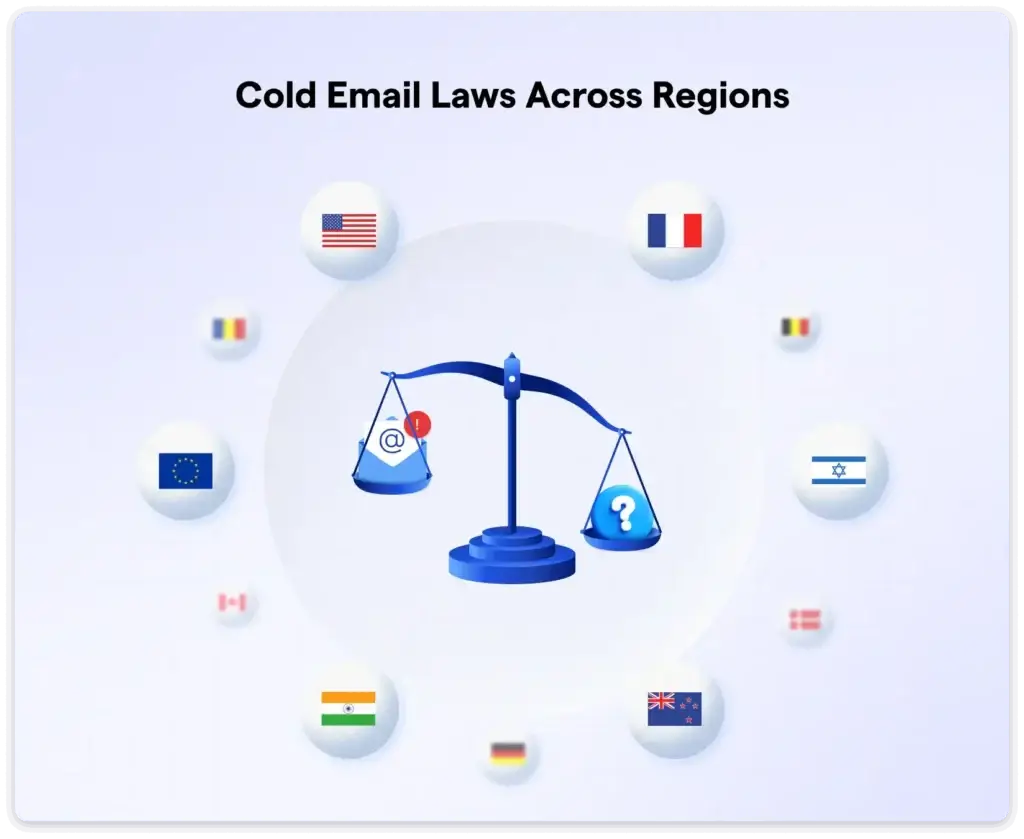
Yes, cold email is legal in most countries. You just need to follow the rules specific to your region. The three laws most cold emailers need to understand are CAN-SPAM, GDPR and CASL.
CAN-SPAM Act (United States)
CAN-SPAM governs commercial email in the US. Its requirements are relatively permissive for B2B cold email:
- Include a clear, functioning unsubscribe mechanism
- Include your physical mailing address
- Don’t use deceptive subject lines or sender information
- Honor unsubscribe requests within 10 business days
B2B cold email is broadly permitted under CAN-SPAM as long as these requirements are met.
GDPR (European Union and UK)
GDPR is stricter. It requires a lawful basis for processing someone’s personal data, which for cold email typically means “legitimate interest.” In practice, this means your outreach must be genuinely relevant to the recipient’s professional role, proportionate and unlikely to override their rights and interests.
Targeting a marketing director at a SaaS company with a relevant B2B offer is generally defensible under legitimate interest. Emailing a list of random EU citizens about your product is not.
CASL (Canada)
Canada’s Anti-Spam Legislation is the strictest of the three. It generally requires either express consent or implied consent (based on an existing business relationship) before sending commercial email. Cold email to Canadian recipients is high-risk unless you have a strong legitimate-interest argument or existing implied consent.
If you’re emailing into Canada regularly, the dedicated article covers CASL compliance in full detail.
Full legal guide
Is Cold Email Legal? GDPR, CASL & CAN-SPAM Explained Simply — covers what each law requires, opt-out rules by region and how to stay compliant without killing your campaign.
What Makes a Good Cold Email? Five Core Elements
Understanding what cold email is gets you to the starting line. Understanding what makes one good is what gets you replies.
Here are the five elements I see consistently in cold emails that work:
A Subject Line That Earns The Open
The subject line is often the first thing a recipient sees. Sometimes it’s the only thing. The best subject lines are specific, short (under 50 characters) and non-clickbait. They don’t promise the world. They hint at a specific, relevant reason for the email.
“Quick question about your Q2 outbound” will outperform “Increase your revenue by 300%” almost every time.
Related reading
Cold Email Subject Lines: 60+ Proven Examples That Get Opens — formulas, real examples by niche and A/B testing principles.
An Opening Line Written For This Person
The first line of your email determines whether the rest gets read. It should reference something specific and real about the recipient: their recent work, their company’s situation, something they’ve said publicly. A line that could apply to anyone reads as a template and gets ignored.
“I noticed [Company] just raised a Series A, congratulations” is a decent opener. “I help companies like yours” is not.
Related reading
Cold Email Personalization: How to Scale 1-to-1 Outreach — icebreakers, personalization variables and how to stay human at scale.
One Clear, Relevant Value Proposition
After the opener, state concisely why you’re reaching out and what’s in it for them. One sentence. Lead with their potential outcome, not your product features. “I help B2B SaaS companies reduce churn in their first 90 days” is a value proposition. “We offer a cutting-edge customer success platform” is not.
A Single, Low-Friction Call To Action
End with one ask. Make it easy to say yes. “Are you open to a 20-minute call this week?” works. “Click the link to book a call, sign up for a demo or download our whitepaper” is three asks wearing one coat.
The lower the friction, the higher the reply rate. A simple question like ‘Would this be relevant to you?’ often outperforms a direct meeting request for cold outreach.
Good Deliverability From A Warmed-Up Inbox
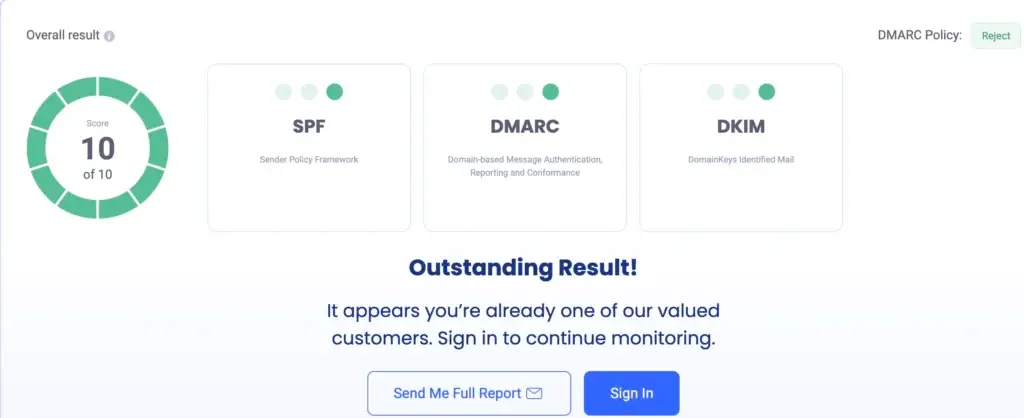
None of the above matters if your email lands in spam. Deliverability is infrastructure. It means having SPF, DKIM and DMARC properly configured, using a warmed-up secondary domain, keeping your sending volume within safe limits and monitoring your sender reputation.
Related reading
Cold Email Deliverability: Why Emails Go to Spam & How to Fix It | Cold Email Infrastructure Setup: Domains, Mailboxes, DNS & Warm-Up.
Frequently Asked Questions
What Is Cold Email? What it Means
Cold email means an unsolicited, targeted email sent to someone with whom the sender has no prior relationship. The sender has researched the recipient and believes their message is relevant. Unlike spam, a cold email is personalized and has a specific, legitimate business purpose: to start a conversation, explore a collaboration or propose a meeting.
Is Cold Email the Same as Spam?
No. The key differences are intent and targeting. Spam is a bulk, indiscriminate message designed to deceive or exploit. It’s illegal in most jurisdictions. Cold email is a deliberate, personalized message to a specific person for a specific professional reason. Cold email is legal when it complies with applicable regulations (CAN-SPAM in the US, GDPR in the EU, CASL in Canada). Spam is not.
Does Cold Emailing Actually Work in 2026?
Yes, when done correctly. Well-targeted, personalized cold email campaigns regularly achieve reply rates of 8–15%. The critical factors are a tightly defined ICP, genuine personalization, a relevant offer, solid deliverability infrastructure and a consistent follow-up sequence. Generic, mass-blasted campaigns underperform. Precision outreach consistently delivers results.
Is Cold Emailing Illegal?
No, cold emailing is not illegal. But it is regulated. In the US, the CAN-SPAM Act permits B2B cold email with certain requirements (clear unsubscribe, physical address, honest subject lines). In the EU and UK, GDPR requires a lawful basis such as legitimate interest. In Canada, CASL is stricter and generally requires consent. Follow the rules for your recipients’ locations and you’re operating legally.
What is the Difference Between Cold Email and Inbound Email Marketing?
Cold email targets individuals who have not opted in. It’s 1-to-1 outreach to a researched prospect. Email marketing targets people who have voluntarily subscribed to your list — it’s 1-to-many communication to an engaged audience. Cold email focuses on opening new conversations. Inbound email marketing focuses on nurturing existing relationships. They use different platforms, different compliance rules and different success metrics.
How Long Should a Cold Email be?
Short. Ideally under 100 words for the initial email. Cold email recipients didn’t ask to hear from you, so respecting their time is part of the value proposition. The goal of a cold email is not to close a deal. It’s to earn a reply. A concise, relevant message is far more likely to get a response than a detailed pitch that reads like a brochure.
Start Sending Better Cold Emails
Cold email is one of the highest-leverage outreach channels in B2B, when the fundamentals are right. It’s not about volume. It’s about sending the right message to the right person with the right infrastructure behind it.
Now that you have the foundation, here’s where to go next:
- Cold Email Subject Lines — proven formulas and 60+ real examples
- Cold Email Follow-Up — the right timing, sequence structure and what to say
- Cold Email Infrastructure Setup — domains, DNS and warm-up done properly
- Cold Email Templates for B2B — real examples across 10 industries
- Cold Email Best Practices 2026 — what changed, what works now, what to stop doing
If you’d like help building or improving your cold email system (infrastructure, copy, campaign strategy), you can work with me directly at riadhasan.com.